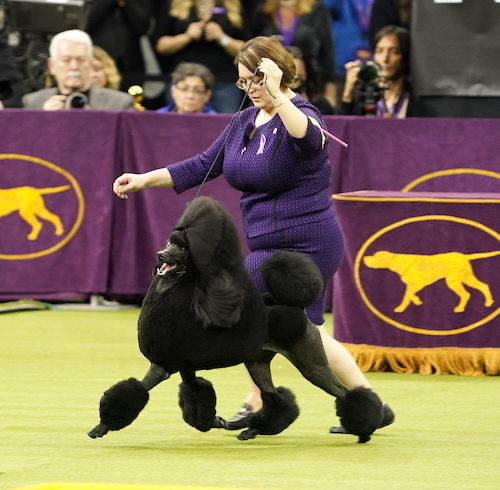
Engelstalig artikel over de showhond/hondenshow
Geplaatst: 27 jul 2025, 09:00
𝗪𝗵𝗮𝘁 𝗮𝗿𝗲 𝘄𝗲 𝗿𝗲𝗮𝗹𝗹𝘆 𝗿𝗲𝘄𝗮𝗿𝗱𝗶𝗻𝗴 𝗶𝗻 𝘁𝗵𝗲 𝗿𝗶𝗻𝗴?
More and more countries are introducing rules about showing dogs on a loose leash, and honestly, it should’ve happened ages ago. Because if a dog needs to be strung up to look good, it probably isn’t built right. If it can’t hold its head, move freely, or stand naturally on its own, that’s the real issue we need to address.
Free-standing dogs aren’t just beautiful, they represent the kind of structure that doesn’t need a handler’s help to shine. The idea that dogs need to be molded into place? That’s totally last century. I’ll take a naturally honest outline over a handler-sculpted one any day. A confident, well-built dog doesn’t need to be shaped like clay. It stands there and says, “Here I am.” It shows structure, confidence, and quality.
Sure, I love a beautiful stacked photo. Who doesn’t? But in the ring, the dog should be the star, not the handler’s hands.
Same goes for movement. I prefer a loose leash and a natural, ground-covering trot that shows balance, efficiency, and ease. And then there’s the race track mentality. Somewhere along the line, people decided faster equals fancier. You see handlers practically sprinting around the ring, dragging dogs into a “flashy” stride that looks dramatic but hides everything that matters. Sure, speed can mask faults; it smooths toplines, tightens movement, and creates the illusion of drive. But a dog show isn’t a speeding contest. If the only way a dog can look balanced is at a near-gallop, you’re not showing soundness, you’re showing smoke and mirrors. A correct, efficient trot should carry itself at a natural pace, showing reach, drive, and effortless balance. When judges reward the blur instead of the blueprint, they’re rewarding performance over structure, and once again, the breed pays the price. What tells me something’s off? Lifted fronts, kicking rears, stressed toplines, artificial head carriage. A dog pushed beyond its natural limits, chasing a false ideal. And if it needs that tight leash to hold itself together, odds are it would lose all shape the moment that leash goes slack. That’s not pretty. That’s sad. And when I see judges rewarding that, I just think: what exactly are we rewarding here? The dog, or the illusion?
I come from a breed where the word “moderate” shows up more than once in the standard, and yet somehow, we keep drifting toward the dramatic. Moderate doesn’t mean dull. It means functional. It means balanced, capable, fit for purpose. And yet exaggeration keeps creeping in, hoping no one looks back at the standard.
Let’s be real. If a dog needs its tail pushed up to look "correct," you’re not showcasing a strong tail set, you’re just covering a weak one. The standard clearly allows the tail to hang when standing, so why do we insist on correcting what was never considered incorrect? Because it looks flashy?
If it needs to be strung up to keep its head up, that’s not carriage, that’s cover-up. The endless tweaking, adjusting, and manipulating doesn’t improve the dog, it just hides the weaknesses. It’s no longer about the dog’s quality but how well that quality can be faked. But a dog show is supposed to be about evaluating breeding stock, not spotlighting whoever can best deceive the judge with finesse and flash. Equal rules make it less about who’s best at puppeteering. When everyone plays by the same standards, structure finally gets to shine.
And here’s the kicker. You can’t breed good handling. You breed for structure, not showmanship. So if the only way a dog looks good is with maximum handling input, what exactly are we preserving? When breed integrity takes a backseat to impressing judges, it stops being about the dogs. It becomes about ribbons. About pride. About ego.
Honestly, it’s disappointing to watch a sound, well-built dog lose to one that’s all flash and relies on tricks and presentation but falls short on true quality and structure. It’s frustrating that judges reward it. And sadly, it’s become the standard expectation. Because in moments like that, it’s not the dog being judged. It’s the performance.
Winning with a mediocre dog through clever presentation might get you the ribbon. But it’s the breed that pays the price in the long run. If you’re fixing flaws in the ring, it’s already too late. Fix them in the whelping box, where the future is made. Your breed will thank you for it.
This isn’t meant as an attack on showmanship. It’s a reminder that the real artistry lies in breeding better dogs, not just showing them better. Presentation has its place, but it should enhance what’s already there, not compensate for what isn’t. Because true legacy is built on honesty, not illusion.
Written by Norwegian Lundehund kennel 'of Vorkosmia'
Ik vind het een goed geschreven en beargumenteerd stuk en denk dat menig handler/fokker/keurmeester zich achter de oren mag krabben of dit niet voor hem/haar van toepassing is.
Mijn showervaring met de Laekense Herder ligt al jaren achter me maar ik vroeg me toen al regelmatig hetzelfde af.
More and more countries are introducing rules about showing dogs on a loose leash, and honestly, it should’ve happened ages ago. Because if a dog needs to be strung up to look good, it probably isn’t built right. If it can’t hold its head, move freely, or stand naturally on its own, that’s the real issue we need to address.
Free-standing dogs aren’t just beautiful, they represent the kind of structure that doesn’t need a handler’s help to shine. The idea that dogs need to be molded into place? That’s totally last century. I’ll take a naturally honest outline over a handler-sculpted one any day. A confident, well-built dog doesn’t need to be shaped like clay. It stands there and says, “Here I am.” It shows structure, confidence, and quality.
Sure, I love a beautiful stacked photo. Who doesn’t? But in the ring, the dog should be the star, not the handler’s hands.
Same goes for movement. I prefer a loose leash and a natural, ground-covering trot that shows balance, efficiency, and ease. And then there’s the race track mentality. Somewhere along the line, people decided faster equals fancier. You see handlers practically sprinting around the ring, dragging dogs into a “flashy” stride that looks dramatic but hides everything that matters. Sure, speed can mask faults; it smooths toplines, tightens movement, and creates the illusion of drive. But a dog show isn’t a speeding contest. If the only way a dog can look balanced is at a near-gallop, you’re not showing soundness, you’re showing smoke and mirrors. A correct, efficient trot should carry itself at a natural pace, showing reach, drive, and effortless balance. When judges reward the blur instead of the blueprint, they’re rewarding performance over structure, and once again, the breed pays the price. What tells me something’s off? Lifted fronts, kicking rears, stressed toplines, artificial head carriage. A dog pushed beyond its natural limits, chasing a false ideal. And if it needs that tight leash to hold itself together, odds are it would lose all shape the moment that leash goes slack. That’s not pretty. That’s sad. And when I see judges rewarding that, I just think: what exactly are we rewarding here? The dog, or the illusion?
I come from a breed where the word “moderate” shows up more than once in the standard, and yet somehow, we keep drifting toward the dramatic. Moderate doesn’t mean dull. It means functional. It means balanced, capable, fit for purpose. And yet exaggeration keeps creeping in, hoping no one looks back at the standard.
Let’s be real. If a dog needs its tail pushed up to look "correct," you’re not showcasing a strong tail set, you’re just covering a weak one. The standard clearly allows the tail to hang when standing, so why do we insist on correcting what was never considered incorrect? Because it looks
 flashy?
If it needs to be strung up to keep its head up, that’s not carriage, that’s cover-up. The endless tweaking, adjusting, and manipulating doesn’t improve the dog, it just hides the weaknesses. It’s no longer about the dog’s quality but how well that quality can be faked. But a dog show is supposed to be about evaluating breeding stock, not spotlighting whoever can best deceive the judge with finesse and flash. Equal rules make it less about who’s best at puppeteering. When everyone plays by the same standards, structure finally gets to shine.
And here’s the kicker. You can’t breed good handling. You breed for structure, not showmanship. So if the only way a dog looks good is with maximum handling input, what exactly are we preserving? When breed integrity takes a backseat to impressing judges, it stops being about the dogs. It becomes about ribbons. About pride. About ego.
Honestly, it’s disappointing to watch a sound, well-built dog lose to one that’s all flash and relies on tricks and presentation but falls short on true quality and structure. It’s frustrating that judges reward it. And sadly, it’s become the standard expectation. Because in moments like that, it’s not the dog being judged. It’s the performance.
Winning with a mediocre dog through clever presentation might get you the ribbon. But it’s the breed that pays the price in the long run. If you’re fixing flaws in the ring, it’s already too late. Fix them in the whelping box, where the future is made. Your breed will thank you for it.
This isn’t meant as an attack on showmanship. It’s a reminder that the real artistry lies in breeding better dogs, not just showing them better. Presentation has its place, but it should enhance what’s already there, not compensate for what isn’t. Because true legacy is built on honesty, not illusion.
Written by Norwegian Lundehund kennel 'of Vorkosmia'
Ik vind het een goed geschreven en beargumenteerd stuk en denk dat menig handler/fokker/keurmeester zich achter de oren mag krabben of dit niet voor hem/haar van toepassing is.
Mijn showervaring met de Laekense Herder ligt al jaren achter me maar ik vroeg me toen al regelmatig hetzelfde af.